

VILLAGES

Chóra, is the capital of the island, stretching out and around the Venetian castle of the 13th century - renovated by the Venetians in 1503 . The architecture of most buildings is typical of the Aegean Sea, but several have Venetian and English elements. The most breathtaking viewpoint "Belvedere", at the city's easternmost point, where it starts to slope down towards Kapsali.
Kapsáli is the first harbor of Kythera, and has one of the most beautiful beaches, with its twin bays, a castle that dominates from the heights, and a lighthouse on the boulder. There are many cafés, bars, restaurants and taverns, as well as other shops on the long promenade, where people stroll back and forth endlessly.

Avlémonas has crystal blue-azul waters with little bays to match and a cycladic architecture and the cobblestone paths. The village offers visitors a nice place to swim thanks to the small inlets, traditional restaurants where you can feast on fresh fish, small cafés on the seaside, and several concerts organized mostly in the summertime.

Potamós is the biggest village of the island, which used to be called "the village of the lady". Potamos is a bustling village where much of the activity is concentrated around the central square and the many cafés; even on a cool winter day, there will always be some chatters and banters at the cafés of the central square of Potamós. Every Sunday morning there is a market where farmers from all over the island come to sell their products. In the summer, musical concerts and theatre shows often take place in the open air municipal theatre.


Agía Pelagía is one of the biggest villages of Kýthera and for several years was the island's main harbor. Today, it is a village specifically geared towards tourism, with many good restaurants and shops. Arriving in the village from Potamos, just before entering it, is a drinkable water source. Legend has it that those who drink from the spring will get married in Kythera. The stone windmill in the heart of the village is also worth a visit.
Mylopótamos had been founded by the Venetians. The Saint Mark’s Lion symbol of the “Serenissima” Republic of Venice still adorns the gate of the remains of the castle in the Káto Chóra neighbourhood. The village is beauteous for the running waters, the plane trees, the ponds with the ducks, the traditional architecture, and the astonishing falls of the Fónissa ravine. Walk down the latter to marvel at a spectacular row of watermills and waterfalls.


Karvounades village is located at the island's geographical center and its main feature is the imposing St. George church with its sky-blue dome. In the village's central square there is a supermarket and a bakery among the many other shops. Karvounades, along with Stathianika, Pitsinianika, Alexandrades, Keramoto and Agios Ilias, make up one of the geographical areas of the municipal corporation of Kythera. Karvounades is one of Kythera's oldest villages, where most of the inhabitants are farmers.
Livadi is the largest village in the southern part of the island, built in a rich valley laden with olive trees, vegetable gardens and vineyards. For some decades now Livadi has been home to a large cooperative organization that produces olive oil, called Afroditi (Venus).
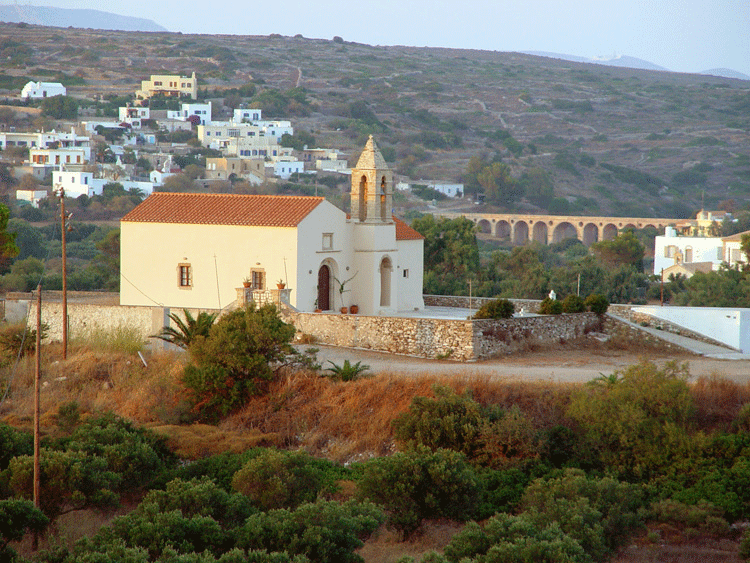

Diakofti is the main harbor of the island and one of the busiest places with its beautiful beach, cafés, restaurants and shops.